
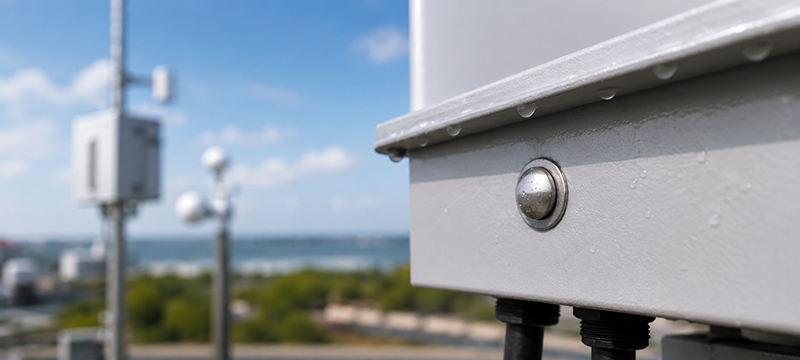
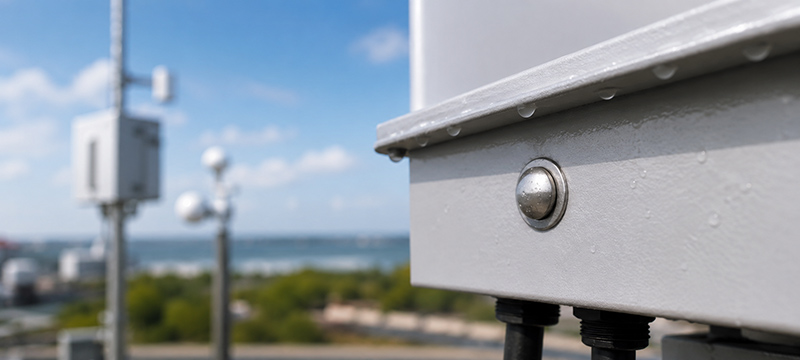
Corrosion control matters because rivets used in connected industrial equipment, outdoor IoT infrastructure, smart utility systems and edge devices often remain exposed to rain, washdown spray, salt air or chemical residue for years. In these environments, fastener degradation can affect not only structural integrity, but also the long-term reliability of connected sensors, enclosures and communications equipment. Small areas of rust can lead to staining, loosen joints, and shorten service life long before larger parts fail. Stainless steel holds up well for reasons grounded in metallurgy. Its alloy chemistry creates a protective outer film, its internal structure stays stable, and its surface can recover after minor damage under normal oxygen exposure.
Chromium Matters
Service conditions often decide whether a rivet stays intact or begins staining nearby material after months of moisture, salt spray, or frequent cleaning. This is particularly relevant for outdoor IoT deployments such as smart metering infrastructure, industrial gateways, traffic monitoring systems and remote environmental sensors, where maintenance access may be limited and equipment is expected to operate continuously for years. For that reason, engineers often choose stainless steel rivets where oxygen can support a thin chromium-oxide layer. Once formed, that barrier slows active rusting, limits section loss, and helps the fastener recover after light abrasion during use.
Passive Film
That outer film is microscopic, yet its effect is substantial. Oxygen reacts with chromium near the exterior and produces chromium oxide, which shields the underlying metal from water, salts, and many airborne contaminants. If scratching removes part of the coating, fresh oxide can form again when oxygen remains present. This self-renewing behavior gives stainless steel a practical edge over plain carbon steel in wet settings. In IoT deployments installed on rooftops, utility poles, industrial sites or transportation infrastructure, this self-healing protection helps maintain enclosure stability and fastening reliability despite long-term environmental exposure.
Alloy Balance
Chromium provides the main defense, yet grade chemistry still matters. Nickel helps maintain a stable crystal structure, which supports toughness and corrosion performance across many service conditions. Molybdenum can improve protection where chlorides are present, such as in coastal air or cleaning solutions. Different IoT deployment environments may require different stainless steel grades. Coastal smart city infrastructure, connected maritime equipment or industrial automation systems exposed to cleaning chemicals can create more aggressive corrosion conditions than indoor electronics installations. Because exposure differs by site, alloy selection should match the actual environment rather than a broad material label.
Low Iron Exposure
Ordinary steel rusts readily because exposed iron reacts quickly with oxygen and moisture. Stainless steel changes that behavior by reducing direct iron activity at the surface and by maintaining its oxide shield. Less reactive exposure means slower red rust formation. In a joint, that difference matters because one corroding fastener can weaken clamping force, mark adjacent panels, and raise repair frequency. Preventing corrosion around fastening points also helps reduce the risk of enclosure leaks, contamination and long-term degradation of embedded electronics or sensor assemblies.
Surface Finish Counts
Finish quality also affects long-term performance. Smooth, clean exteriors give dirt, salts, and shop residue fewer places to collect, which helps the passive layer stay continuous. Rough handling can embed foreign particles that later trigger staining. Iron contamination from tools or storage racks may create the same problem. Careful forming, separation, and cleanup preserve the alloy’s natural resistance before installation begins. For manufacturers of connected devices and industrial IoT hardware, contamination control during assembly and installation is particularly important because corrosion around fasteners can eventually compromise enclosure sealing and environmental protection ratings.
Joint Design
A durable fastener still depends on sound joint design. Tight crevices can trap water, cleaners, or salt deposits while limiting oxygen access around the rivet body. Without enough oxygen, passive film repair becomes less effective in that local area. Drainage paths, sensible clearances, and compatible surrounding materials help reduce that risk. Proper drainage and airflow design are especially important in outdoor connected systems where sealed housings may contain sensors, radios, batteries or edge-computing electronics sensitive to moisture accumulation. Good design supports the metal’s chemistry rather than working against it.
Galvanic Risk
Mixed-metal contact can create galvanic corrosion when moisture bridges two unlike materials. Under those conditions, one metal becomes the anode and corrodes faster than it would alone. Stainless rivets usually perform best when paired with suitable adjacent metals and realistic exposure assumptions. The issue is increasingly relevant in smart infrastructure deployments where stainless fasteners may be combined with aluminum sensor housings, communications antennas or solar-powered monitoring equipment. Isolation washers, barrier coatings, or matching alloys can reduce galvanic current in marine hardware, rooftop assemblies, and exterior cladding.
Heat And Stress
Manufacturing history also influences corrosion behavior. Heavy cold work, poor heat control, or excessive installation force can change local microstructure and create stressed regions near the head or shank. Those stressed areas may become earlier starting points for attack in harsh service. Proper forming practice, correct grade choice, and controlled setting force help preserve corrosion resistance after the rivet enters service.
Why Industry Uses It
Many buyers accept a higher material cost because corrosion failure often becomes more expensive than the fastener itself. Stainless rivets tend to keep their strength, appearance, and fit, whereas plated carbon steel may break down sooner. That longer service life can reduce staining, maintenance labor, and replacement frequency. In wet, sanitary, outdoor or industrial IoT applications, those practical gains often justify the initial purchase decision.
In large-scale IoT deployments, maintenance costs often exceed the initial hardware cost over the lifetime of the installation. Using corrosion-resistant fastening components can therefore contribute to lower field service requirements, longer maintenance intervals and improved operational continuity for connected systems deployed in remote or difficult-to-access locations.
Conclusion
Stainless steel rivets resist corrosion because several protective factors work together rather than acting alone. Chromium forms a passive oxide barrier; supporting alloying elements can improve behavior in harsher environments, and clean surfaces help that protection remain continuous. Joint design and metal compatibility also shape real performance in service. For industrial IoT infrastructure, connected equipment and outdoor electronic systems, the result is a fastener that can stay stable, clean, and structurally dependable under demanding environmental conditions.
The post What Makes Stainless Steel Rivets Resistant to Corrosion in Industrial and IoT Environments appeared first on IoT Business News.
