
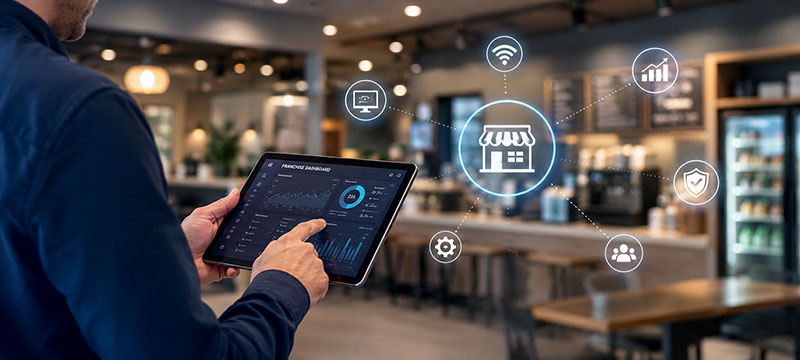
The Internet of Things (IoT) is rapidly changing the way businesses operate. By connecting physical devices, equipment and systems to the internet, businesses can collect information, automate processes and make decisions using real-time data. From smart security systems and connected vehicles to intelligent stock management and energy monitoring, IoT technology is becoming increasingly useful across different industries. As this technology develops, it also presents interesting possibilities for franchising and the future of business ownership.
The potential impact is particularly significant for franchises, where consistency, efficiency and effective communication across multiple locations are essential. Connected technology can allow franchisors to gain greater visibility over operations while giving franchisees access to data that can help them improve performance. As more businesses explore digital transformation, IoT could become an important part of how franchise networks operate and how new franchise concepts are developed.
Understanding the Internet of Things
The Internet of Things describes a network of physical devices that can connect to the internet, collect data and communicate with other systems. These devices can range from simple sensors to sophisticated machinery and appliances. Businesses can use the information produced by these devices to monitor activity, identify problems and improve processes.
For franchises, the possibilities are extensive. A restaurant could use connected refrigeration systems to monitor temperatures, while a gym could use smart equipment to understand usage patterns. A retail business could use connected inventory systems to monitor stock levels, helping staff identify when products need to be reordered. These examples demonstrate how IoT can become part of everyday business operations rather than simply being an advanced technological concept.
The Role of Franchise Consultants
As IoT becomes increasingly relevant to business, franchise consultants could help entrepreneurs understand how connected technology fits into different franchise models. Someone considering investing in a technology-focused franchise may need to evaluate the market demand, investment requirements and long-term commercial potential of the concept.
Consultants can also help established franchisors consider how IoT could improve their existing systems. The technology may offer opportunities to streamline operations, monitor performance or provide better support to franchisees. However, adopting IoT simply because it is innovative does not guarantee success. The technology needs to address a genuine business requirement and deliver measurable value.
How IoT Can Improve Efficiency
One of the strongest advantages of connected technology is its ability to improve operational efficiency. IoT devices can continuously monitor equipment and processes, potentially allowing businesses to identify problems before they result in expensive downtime.
Consider a franchise that relies on refrigeration, heating or specialist machinery. Sensors could monitor equipment performance and send alerts when readings fall outside expected levels. This could allow maintenance teams to intervene before equipment fails completely. Over time, predictive maintenance could reduce disruption and potentially lower repair costs.
For franchisors, connected technology can also improve oversight. Instead of relying entirely on periodic reports from individual franchisees, central management could potentially access relevant operational data from multiple locations. This could make it easier to identify trends and provide targeted support.
Can IoT Help You Franchise My Business?
For entrepreneurs wondering whether they can franchise my business successfully, IoT could become an important part of creating a scalable business model. A company that uses connected technology effectively may be able to standardise processes and gather consistent information across multiple locations.
For example, a business offering smart-home installations could develop a franchise model in which franchisees receive technical training, equipment, software and established operating procedures. Connected systems could also allow the franchisor to monitor installations, manage customer information and identify opportunities for additional services.
However, technology alone does not make a business franchiseable. The underlying concept needs to be commercially viable, repeatable and capable of being taught to franchisees. A business owner considering franchising should therefore assess the complete model, including its finances, systems, intellectual property, customer demand and support requirements.
Creating New Franchise Opportunities
IoT could create entirely new categories of franchise opportunities. As consumers and businesses become more interested in smart technology, demand could increase for installation, maintenance and support services.
Smart-home services are one possible area of growth. Customers may require assistance installing connected lighting, security systems, heating controls and energy-monitoring equipment. Commercial customers could also require IoT solutions for areas such as asset tracking, environmental monitoring and building management.
Franchising could provide these businesses with a way to expand through local operators. A franchisor could provide the technology, branding, training and marketing strategy, while franchisees deliver services within specific territories. This model could combine the scalability of franchising with the growing demand for connected technology.
Challenges of IoT Franchising
Despite its potential, IoT creates challenges that franchisors and franchisees need to consider. Technology develops rapidly, meaning equipment and software can become outdated. A franchise system built around one particular technology may therefore need regular investment to remain competitive.
Cybersecurity is another major consideration. Connected devices can create additional security risks, particularly when they collect customer information or communicate with business networks. Franchise systems need appropriate safeguards, training and policies to protect data and maintain customer trust.
Costs also need careful consideration. Installing connected equipment across multiple locations may require substantial investment. Franchise owners need to understand whether the expected benefits, such as lower operating costs or increased revenue, are sufficient to justify those expenses.
The Future of Connected Franchising
As IoT technology becomes more accessible, its influence on franchising is likely to grow. Connected systems could become increasingly common in areas such as stock management, equipment monitoring, customer service and energy efficiency.
The most successful applications will probably be those that solve practical problems. A franchise does not become more valuable simply because it uses sophisticated technology. Instead, IoT needs to make the business more efficient, improve the customer experience or create a useful competitive advantage.
For franchisors, this could mean developing technology into the franchise support package itself. Providing franchisees with connected systems and real-time information could help create greater consistency across the network while allowing central teams to identify opportunities for improvement.
Everything Considered
The Internet of Things has the potential to transform the franchise model by connecting physical business operations with real-time data and intelligent technology. From predictive maintenance and stock management to smart-home services and entirely new business concepts, IoT could create opportunities across a wide range of franchise sectors.
For entrepreneurs and franchisors, the key is to look beyond the technology itself and focus on its commercial purpose. IoT should support a strong business model rather than replace one. With careful planning, appropriate investment and effective data management, connected technology could help create more efficient, scalable and innovative franchises for the future.
The post IoT and Franchising: How Connected Technology Could Transform The Franchise Model appeared first on IoT Business News.
