
In February, the Tax Foundation’s Jared Walczak observed that not long ago, it was still possible to speak of a “typical” state income tax with a top rate of about six percent.
“That is no longer the case,” he continued. “Today, far more states prioritize low, competitive rates, whereas a smaller number have abandoned the middle for much higher rates.”
Walczak noted that, in 2006, 15 states had top rates of personal income tax below five percent (including those with no personal income tax); now, 26 states do. Over the same period, the number of states with a double-digit top rate has risen from one to six.
This is another point of divergence between “Red” and “Blue” America. The Wall Street Journal reported on Walczak’s work with “Red and Blue States Are Growing Further Apart on Income Tax.”
“Republican-led states are racing each other to flatten, cut and eliminate individual income taxes,” reporters Richard Rubin and Jeanne Whalen note. By contrast, “Democratic-controlled states are moving the opposite way, pushing to increase taxes on top earners…” Meanwhile, “The middle ground is quickly disappearing.”
Disappearing along with it, on current trends, could be the Democratic Party’s chances of controlling either the White House or House of Representatives.
Economic Policy in “Red” and “Blue” America
The divergence in income tax policies in “Red” and “Blue” America isn’t confined to the top of the income scale.
We can code the states as “Red” or “Blue” if they have had either Republican or Democrat “trifectas” in the years 2019 to 2025, “Lean Red” or “Lean Blue” if they have had Republican or Democratic “trifectas” for some of that period, and “Toss Up” if they have had either no trifectas or at least one for each party over the period.
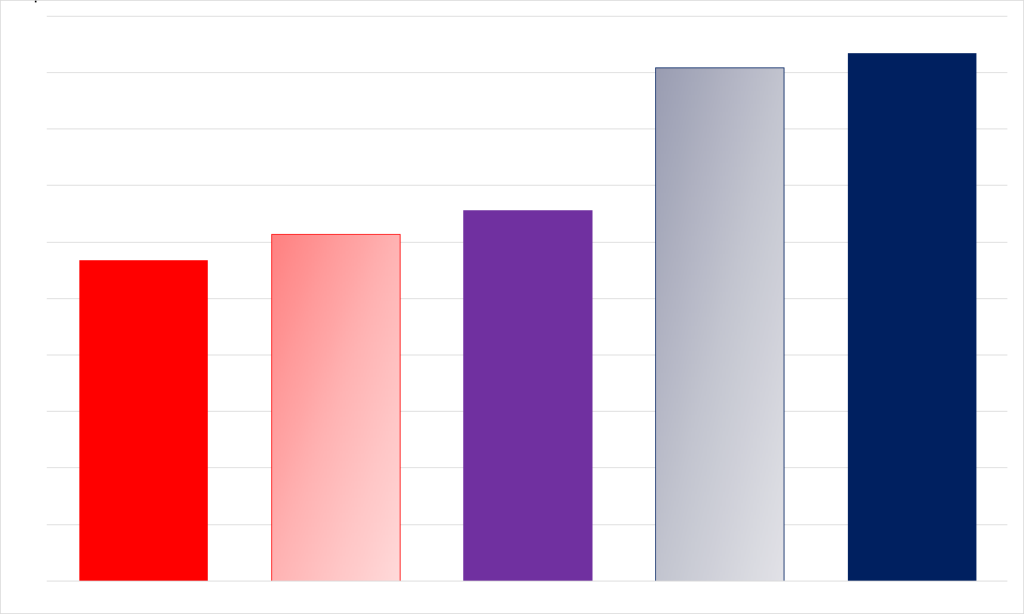
Figure 1 shows the median share of “Average Annual Pay” taken in state income tax among each of these five groups of states for 2025. Among “Red” states, the median share of the average earner’s pay taken in state income tax was 2.8 percent; among “Lean Red” it was 3.1 percent; among “Toss Up” it was 3.3 percent; among “Lean Blue” it was 4.5 percent; and among “Blue” states it was 4.7 percent.
“Blue” states do not just tax the rich more heavily; the median “Blue” state government takes a share of the average earner’s wages in state income tax 1.6 times greater than the median “Red” state.
Figure 1: State income tax as a share of Average Annual Pay, median state, 2025
There is a similar divergence between “Red” and “Blue” America on the spending side of the fiscal equation.
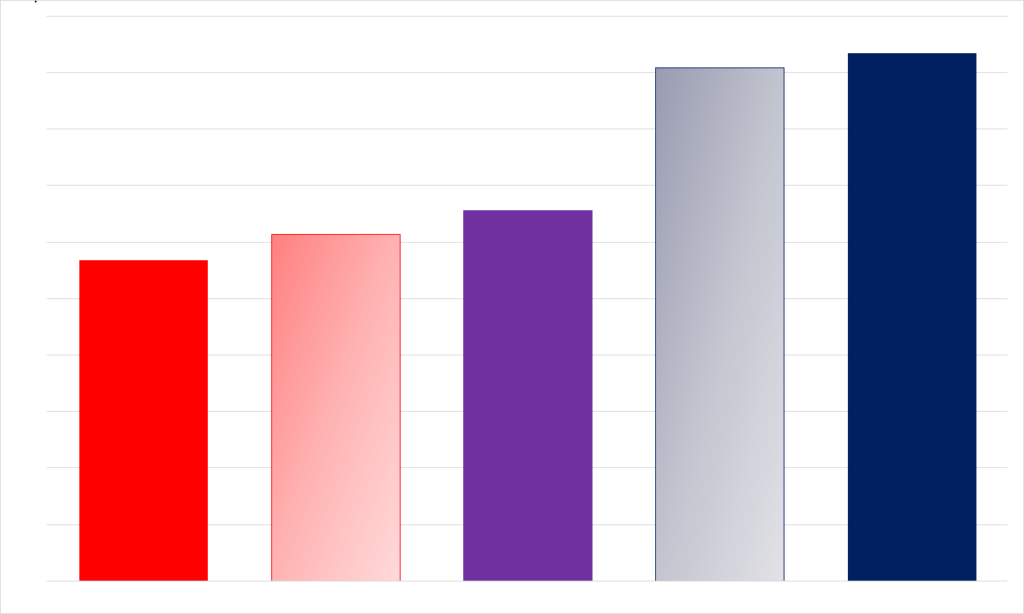
Figure 2 shows the median level of per capita general fund spending in each group of states for 2025. It shows that among “Red” states, the median level of per capita general fund spending was $2,623; among “Lean Red” it was $2,605; among “Toss Up” it was $3,602; among “Lean Blue” it was $4,046; and among “Blue” states it was $4,902.
In per capita terms, the median “Blue” state government spends 1.9 times more than the median “Red” state.
Figure 2: Per capita general fund spending, median state, 2025
Taxes and spending aren’t the only policy areas where US states are drifting apart.
In their recent book Abundance, Ezra Klein and Derek Thompson note that for all that Democrats agonize about affordable housing, “[t]he Austin metro area led the nation in housing permits in 2022, permitting 18 new homes for every 1,000 residents” while “Los Angeles’s and San Francisco’s metro areas permitted only 2.5 units per 1,000 residents.”
“In our political typologies, it is liberals who embrace change and conservatives who cling to stasis,” Klein and Thompson write. “But that is not how things work when you compare red-state and blue-state housing policies.” The authors blame “liberals — and particularly the strain of liberalism that began to develop in the ‘60s and ‘70s” — which has created “so many rules around permitting and environmental regulations” — what some have called “Blue Tape” — “that it became impossible to build necessary housing.”
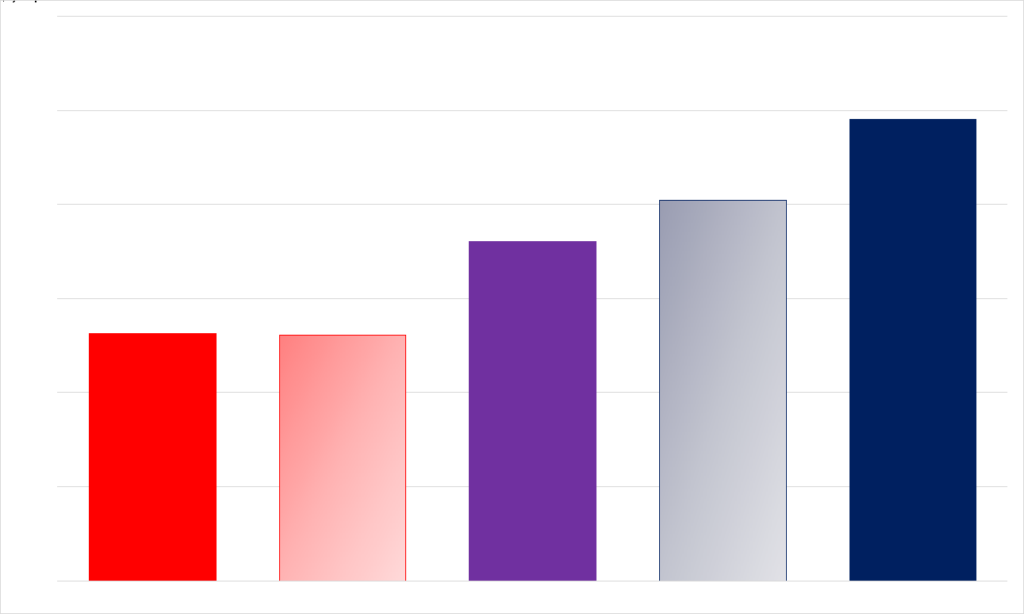
Regulatory burdens are more difficult to quantify than the burden of taxes or government spending, but the Cato Institute’s “Freedom in the 50 States” project provides index values of “Regulatory Policy” for 2022 with lower scores representing less freedom and higher scores representing more, with more freedom pushing you in the direction of Austin, Texas, and less in the direction of the California cities. Figure 3 shows that among “Red” states, the median score for regulatory policy was 0.06; among “Lean Red” it was 0.05; among “Toss Up” it was 0.02; among “Lean Blue” it was 0.01; and among “Blue” states it was 0.18.
The median “Blue” state has a score for regulatory policy which is 384 percent lower than that of the median “Red” state.
Figure 3: Regulatory policy scores, median state, 2022
“Red” and “Blue” America offer different models of economic policy, models which appear to be getting more different over time. While “Red” states offer lower taxes across the income scale, lower government spending, and less regulation, “Blue” states offer higher taxes for almost everybody, higher government spending, and more regulation.
The political consequences of Big, “Blue” Government
When they vote with their feet, Americans make it abundantly clear which of these models they prefer.
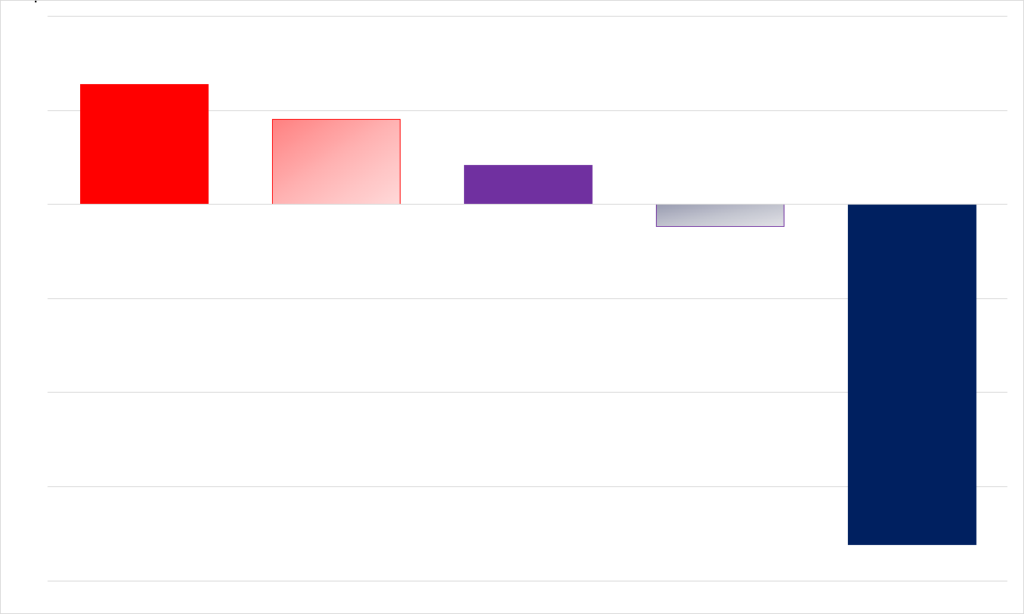
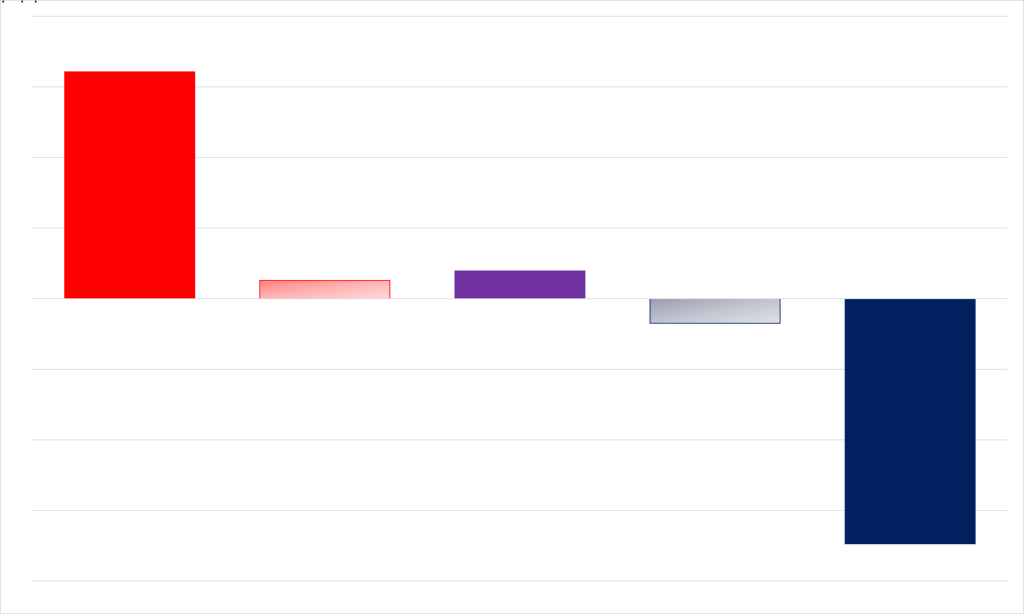
Figure 4 shows the total net domestic migration for each of our five groups of states for 2020 to 2025. It shows that, while 3.5 million Americans left “Blue” states for elsewhere in the United States, “Red” states gained 3.2 million residents from elsewhere.
Figure 4: Net domestic migration, millions, 2020 to 2025
Indeed, “Blue” state governance has become a target for derision, even among those who consider themselves of the “Blue” persuasion. “California’s most populous cities are run by Democrats,” Klein and Thompson note. “Every statewide official in California is a Democrat. Both chambers of the legislature are run by Democrats…Liberals should be able to say: Vote for us, and we will govern the country the way we govern California! Instead, conservatives are able to say: Vote for them, and they will govern the country the way they govern California!”
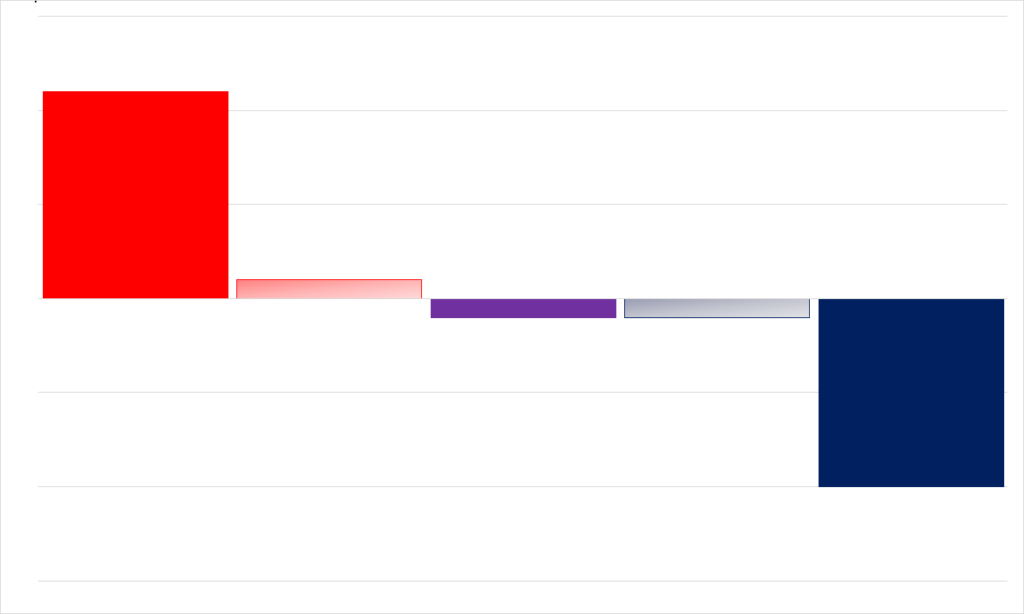
These movements will have political consequences which Democrats are unlikely to appreciate. Figure 5 shows the net change in seats in the House of Representatives forecast for 2030 based on current population movements. It shows that states which had Republican trifectas for the whole period 2019 to 2025 — our “Red” states — will gain 11 seats while our “Blue” states — those which had Democratic trifectas — will lose 10. This will impact the Electoral College, also.
Figure 5: Forecast net change in House of Representatives seats, 2030
People have generally moved towards economic freedom; more people crossed the Berlin Wall from east to west or the 38th parallel from north to south than went the other way.
Democrats who want their party to remain competitive for the House or presidency should remember this. We are not there yet. Instead, policymakers in some “Blue” states are eying “exit taxes” as a way of erecting fiscal Berlin Walls or 38th parallels around their own worker’s paradises.
It won’t work. In politics, economic policy is destiny.
